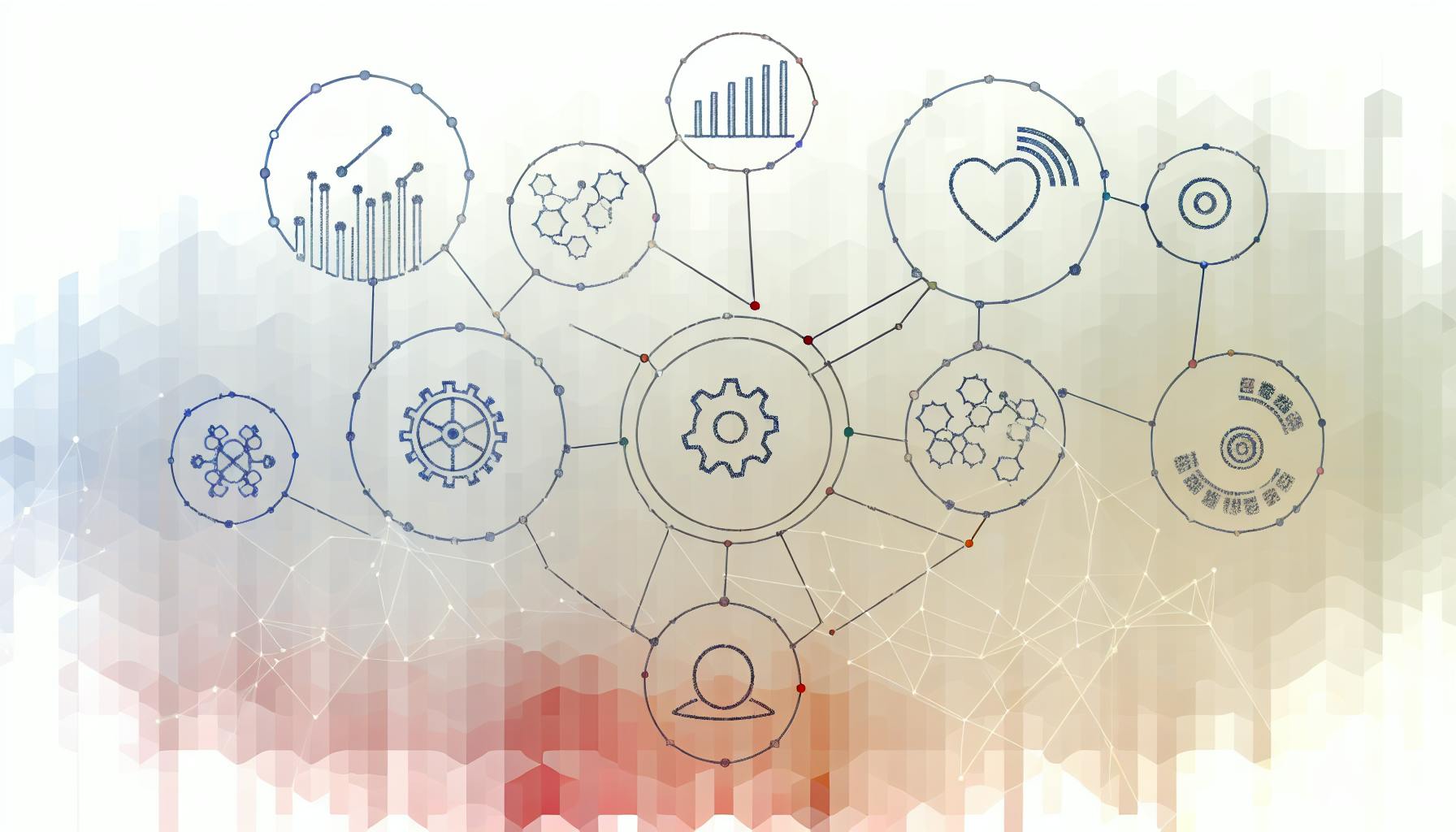
A sales funnel transforms potential customers into buyers through a structured journey. It’s not just about attracting leads - it’s about converting them effectively. By improving even small parts of the funnel, businesses can boost revenue without increasing lead acquisition costs. This guide breaks down the process into three key stages:
- Lead Generation: Focus on finding the right prospects through methods like cold outreach, content marketing, and referrals.
- Lead Nurturing: Build trust with personalized communication, multi-channel engagement, and lead scoring to prioritize efforts.
- Closing Deals: Convert leads into customers with tailored proposals, strategic follow-ups, and objection handling.
Tools like Apollo (for prospecting), HubSpot (for CRM and pipeline management), and Instantly (for email outreach) streamline these stages. To optimize your funnel, track metrics like conversion rates, time-to-close, and engagement. Use automation, segmentation, and interactive content to enhance performance. Regularly review and adjust your funnel to eliminate bottlenecks and scale successful strategies.
A well-structured funnel isn’t just a process - it’s a system that drives consistent, measurable growth.
ULTIMATE Guide To Building A Sales Funnel (For Free)
The 3 Main Stages of a Sales Funnel
Every effective sales funnel operates through three clear stages, each designed to guide potential customers from initial interest to final purchase. By understanding these stages - lead generation, nurturing, and closing - you can create a structured sales process that delivers consistent results.
Think of your funnel as a step-by-step journey. Each stage has a specific purpose: attracting the right prospects, building trust, and ultimately converting them into customers. This approach ensures you focus your efforts on qualified leads and maximize your chances of success.
Lead Generation: Attracting the Right Prospects
Lead generation is all about identifying and engaging prospects who match your ideal customer profile. The goal here isn’t just quantity - it’s about finding leads who genuinely need your solution and have the authority to make purchasing decisions.
- Cold outreach: This involves researching potential customers and crafting personalized messages tailored to their needs. Whether through email or LinkedIn, success depends on targeting the right people and addressing their specific pain points.
- Content marketing: By creating valuable resources like blog posts, webinars, and case studies, you can naturally attract prospects who are already searching for solutions to their challenges.
- Referral programs: Happy customers can be your best advocates. Referrals often come with built-in trust, making them some of the easiest leads to convert.
Tools like Apollo simplify lead generation by providing access to prospect databases and contact details, saving you time on research and letting you focus on outreach. Using multiple channels ensures a steady flow of leads while reducing reliance on any single method.
Lead Nurturing: Building Relationships and Trust
Once you’ve captured a lead, the next step is nurturing them through consistent, meaningful communication. This stage is crucial for keeping prospects engaged until they’re ready to make a decision.
- Email sequences: Automated email campaigns deliver tailored content based on where the prospect is in their journey. For instance, early-stage leads might receive educational resources, while later-stage leads get case studies or product demos.
- Personalization: Effective nurturing goes beyond using a prospect’s name. It involves crafting messages that address their specific industry, role, and challenges, making your communication feel directly relevant.
- Multi-channel engagement: While email is a staple, expanding to LinkedIn messages, phone calls, or even direct mail can help you connect with prospects on their preferred platforms.
Timing is everything. Regular touchpoints keep you top of mind without overwhelming prospects. Always aim to provide value - whether it’s sharing helpful insights, offering resources, or connecting them with someone who can assist.
Lead scoring is another powerful tool for prioritizing your efforts. By tracking behaviors like email opens, webinar attendance, or visits to your pricing page, you can identify high-intent prospects and focus your attention where it matters most.
Closing Deals: Turning Prospects into Customers
The final stage of the funnel is all about converting nurtured leads into paying customers. This requires strategic follow-ups, handling objections, and managing deals effectively.
- Discovery calls: These conversations help you understand the prospect’s needs, budget, and decision-making process. The insights gained here shape your entire closing strategy.
- Custom proposals: A one-size-fits-all approach rarely works. Tailor your proposals to address the prospect’s specific challenges, including relevant case studies, ROI estimates, and timelines.
- Objection handling: Be prepared to address concerns like budget constraints or feature comparisons. Acknowledge objections honestly, provide clear answers, and steer the conversation back to the value your solution offers.
Tools like HubSpot can make deal management easier by tracking interactions, managing pipelines, and ensuring no opportunities slip through the cracks. Persistent follow-ups are also key - research shows that most sales require multiple touchpoints, yet many salespeople give up too soon.
The best closers focus on solving problems, not just selling products. By positioning yourself as a trusted advisor who understands your prospect’s challenges, you build the confidence they need to move forward. This consultative approach can make all the difference in sealing the deal.
Top Tools for Building and Optimizing Your Sales Funnel
In today's fast-paced sales environment, managing leads manually or with basic spreadsheets just doesn’t cut it anymore. Sales teams need tools that not only handle the complexity of the funnel but also integrate seamlessly to keep everything running smoothly. Here are three standout platforms that can help streamline each stage of your sales funnel.
Apollo: Lead Sourcing and Prospecting
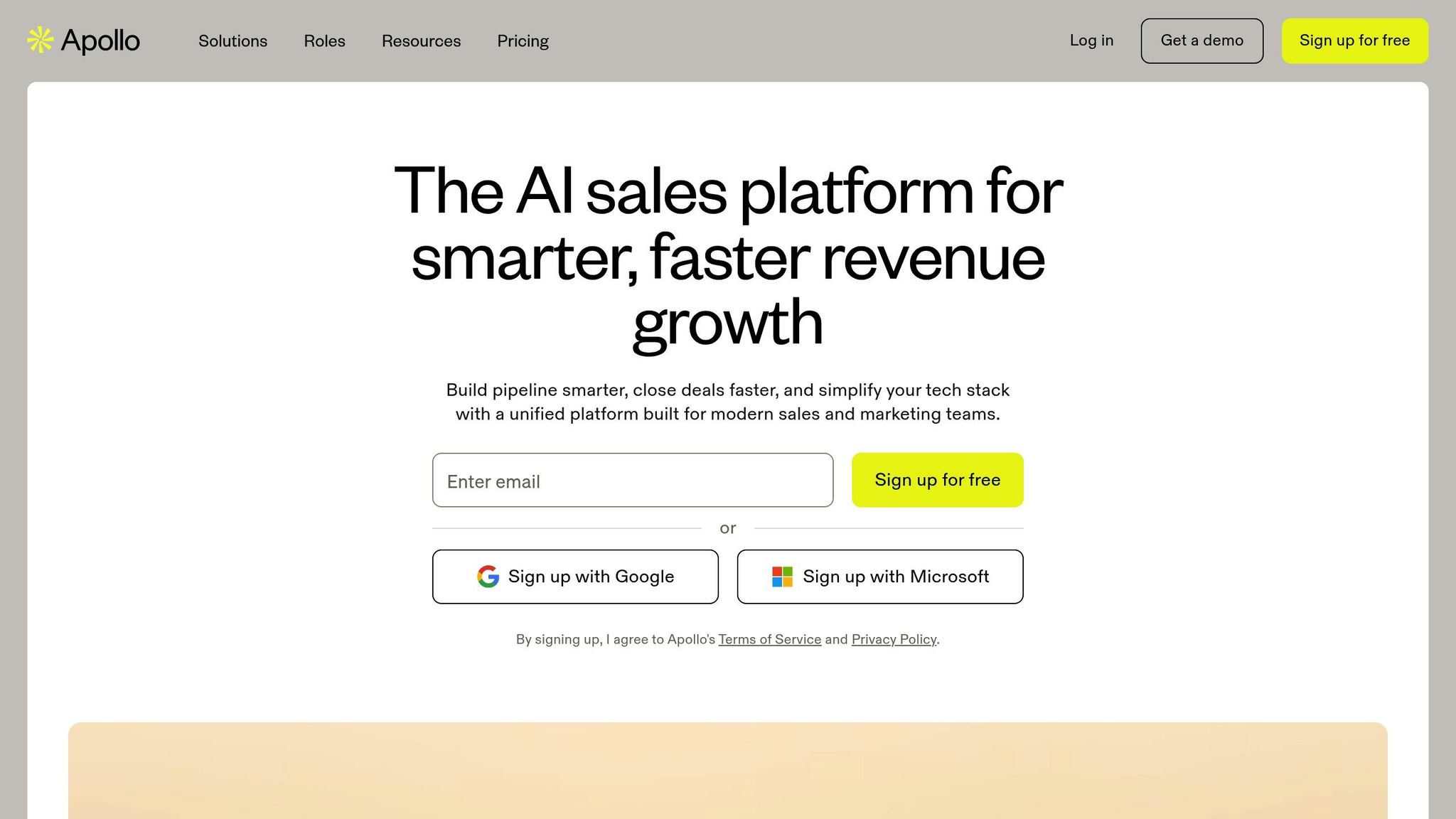
Apollo is like a turbocharged engine for your prospecting efforts, combining a massive contact database with advanced search and outreach tools. It helps you zero in on the right prospects and provides instant access to their contact details.
The platform offers a treasure trove of verified contacts across industries and company sizes. You can filter your search by criteria like job title, company revenue, technology stack, or even recent funding rounds. This level of precision ensures you're targeting the decision-makers who have the authority and resources to act on your proposal.
One of Apollo’s standout features is its intent data. By tracking signals like website visits and content downloads, it identifies companies actively searching for solutions like yours. This means you can focus your outreach on prospects who are already in the market, increasing the chances of a meaningful connection.
Apollo also includes tools for finding and verifying emails, ensuring you’re working with accurate contact information while protecting your sender reputation. Its combination of intent data and precise filtering helps you prioritize leads that are most likely to convert.
HubSpot: CRM Integration and Sales Pipeline Management
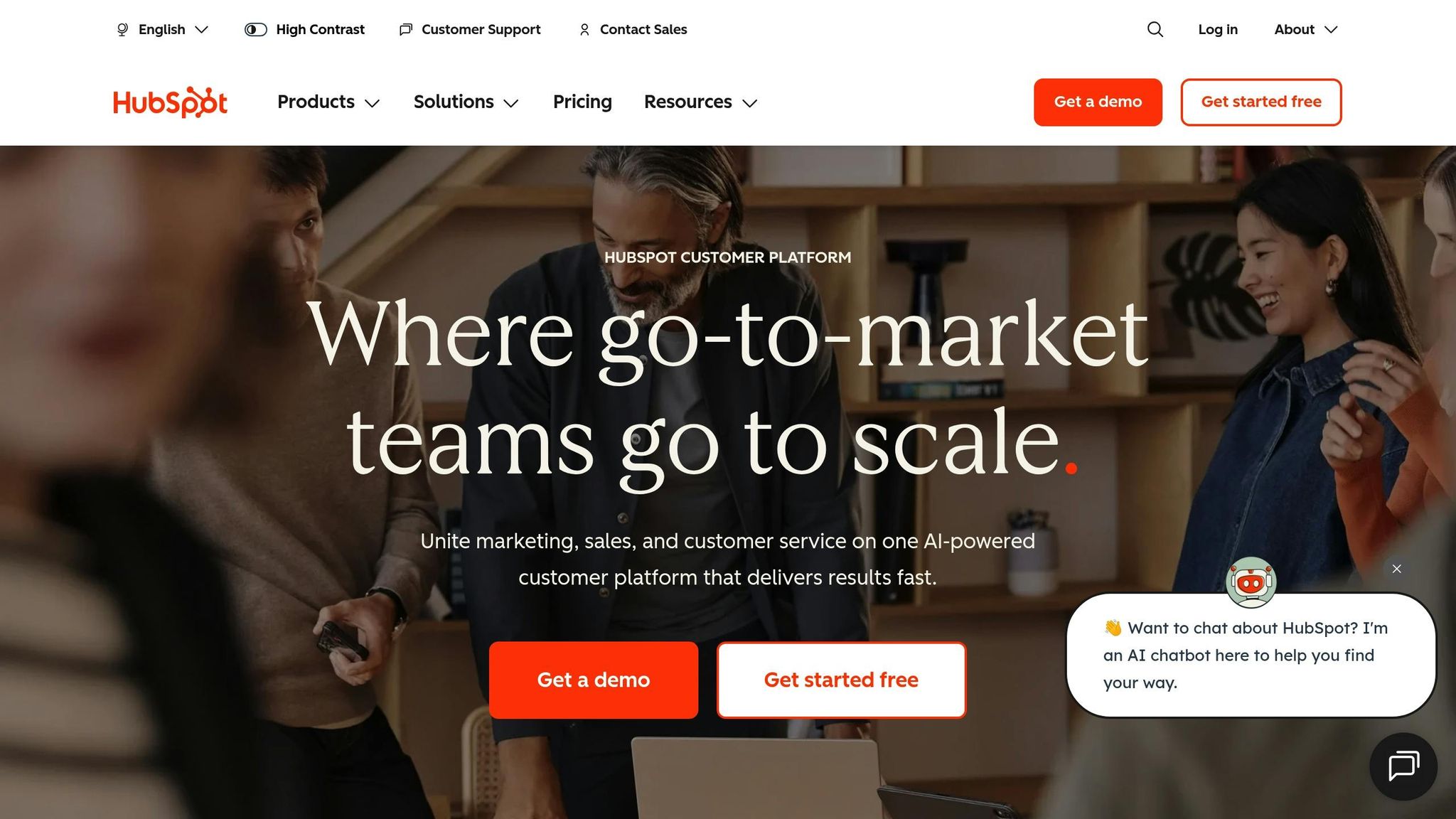
HubSpot takes the chaos out of managing relationships and tracking deals by centralizing all your prospect and customer data in one place. It gives your team a clear view of every interaction and opportunity, making it easier to stay organized and effective.
The contact management system automatically pulls in data from multiple sources - whether it’s a form submission, webinar attendance, or email response. This eliminates manual data entry and ensures no critical detail gets overlooked.
When it comes to pipeline management, HubSpot shines with customizable deal stages that match your sales process. Each deal includes essential details like closing probability, expected revenue, and next steps, helping your team focus on high-value opportunities and identify bottlenecks.
HubSpot also tracks every interaction - emails, calls, meetings - and logs them automatically. For example, if you send an email through the platform, it not only records the interaction but also notifies you when the prospect engages with it. This real-time insight makes follow-ups more effective and helps you understand what resonates with your audience.
The platform’s reporting and analytics tools provide an in-depth look at your funnel’s performance. You can monitor conversion rates, pinpoint the best lead sources, and even evaluate individual team members’ performance. Plus, with workflow automation, routine tasks like assigning leads or sending follow-ups are handled automatically, freeing up your team to focus on closing deals.
Instantly: Scaling Outreach Campaigns
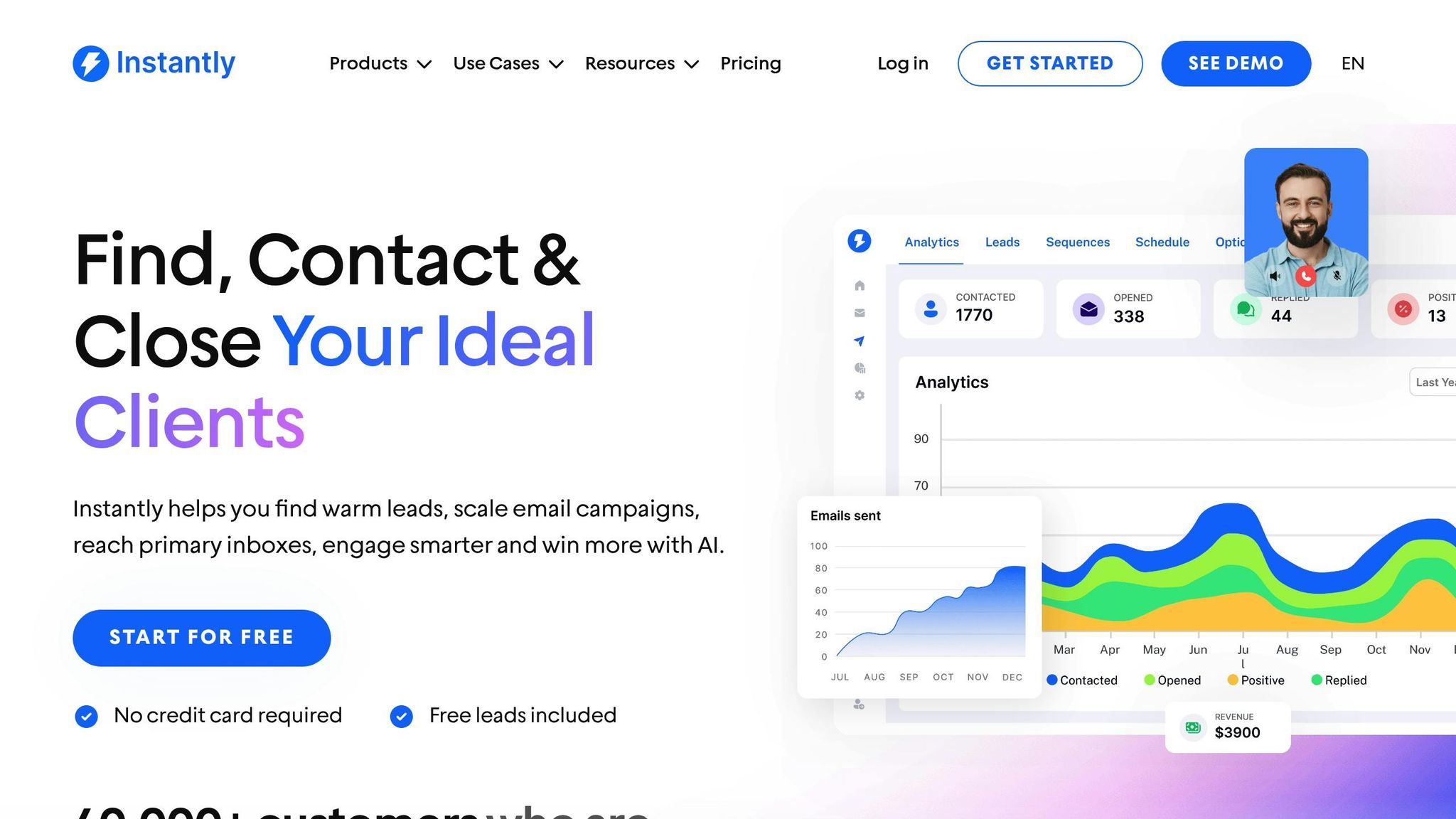
Instantly is designed to help sales teams supercharge their email outreach while maintaining high deliverability and personalization. It’s a go-to tool for scaling cold email campaigns without sacrificing quality.
One of its key features is domain warming, which ensures new email domains are ready for high-volume sending without risking deliverability issues. By managing multiple accounts and rotating between them, Instantly minimizes the chances of any single account being flagged while enabling larger outreach campaigns.
Personalization is another area where Instantly excels. Beyond basic merge tags, it allows you to create dynamic content blocks tailored to each prospect’s attributes, such as their industry, company size, or job title. With AI-powered suggestions, your emails feel personal and customized - even when sent at scale.
The platform’s campaign analytics provide a detailed breakdown of performance metrics like open rates, reply rates, and conversions. This data helps you refine your messaging, subject lines, and sending schedules for better results over time.
Instantly also simplifies reply management by consolidating all responses in one dashboard. Positive replies can be flagged quickly, follow-ups can be scheduled on time, and unsubscribes are handled automatically - all while staying compliant with email regulations.
To top it off, Instantly integrates with popular CRMs, syncing prospect data and campaign results so your outreach efforts are seamlessly tracked alongside your broader sales activities.
sbb-itb-8aac02d
How to Increase Funnel Conversion Rates
Getting the right tools in place is just the first step. The real challenge - and opportunity - lies in fine-tuning each stage of your funnel to turn more prospects into paying customers. Even small tweaks at each step can lead to noticeable improvements across your entire sales process. Here’s how you can boost conversion rates at every stage.
Segmentation and Personalization at Scale
Generic messaging just doesn’t cut it anymore. When prospects sense they’re receiving a one-size-fits-all message, they’re much more likely to brush it off. Instead, divide your audience into meaningful segments and craft your messaging to address their specific needs.
For instance, tailoring your message by industry can make a world of difference. A healthcare company might care most about compliance, while a retail business might focus on inventory management. Similarly, segmenting by company size can help you hit the right tone. Small businesses often look for cost-effective and easy-to-implement solutions, whereas larger enterprises are more concerned with scalability, security, and integration.
Behavioral segmentation allows you to take things further. Actions like downloading a pricing guide or attending a product demo signal where a prospect is in their buying journey. Someone who visits your blog is likely still exploring, while someone who checks out a demo is showing serious interest. By tracking these behaviors, you can time your follow-up to deliver the perfect message at the right moment.
Dynamic content is another powerful tool. Imagine someone from a 500-person manufacturing company visits your website and sees case studies about similar businesses and content on scaling operations. It feels relevant and helpful rather than forced or generic, which makes a lasting impression.
Using Automation for Consistent Engagement
Automation can handle repetitive tasks, freeing up your team to focus on building meaningful relationships. It ensures every prospect gets consistent follow-ups, even when your team is swamped.
The trick is to make automated messages feel personal and valuable. Instead of sending bland “just checking in” emails, offer something useful - like industry insights, a case study, or answers to common questions. This positions you as a trusted resource rather than a pushy salesperson.
Lead scoring automation is another game-changer. It prioritizes prospects by ranking them based on their actions and attributes. For example, a visitor who repeatedly checks your pricing page, downloads multiple resources, and fits your ideal customer profile should be flagged for immediate attention. Meanwhile, lower-priority leads can continue receiving nurturing content until they show stronger buying signals.
Automation can also simplify admin tasks. If a prospect books a demo, automation can instantly create a deal record, assign it to the right salesperson, send calendar invites, and even trigger reminders to prepare. This ensures no details slip through the cracks.
For the most advanced teams, automation can kick in based on specific actions. For instance, if someone spends a lot of time on your pricing page, your system can alert the assigned salesperson and add the prospect to a high-intent follow-up sequence. These timely responses can make the difference between closing a deal and losing a lead.
Adding Interactive and Visual Content
Interactive and visual content isn’t just eye-catching - it keeps prospects engaged and provides valuable insights into their interests. Tools like interactive demos, calculators, and visual timelines can grab attention and hold it longer than plain text.
For software or technical products, product demos and screen recordings are especially effective. Instead of explaining features in writing, showing prospects exactly how your solution works can leave a stronger impression. Short, focused videos that address specific use cases often outperform lengthy overviews.
Interactive calculators and assessments are another win-win. They offer immediate value to prospects - like estimating cost savings with an ROI calculator - while giving you useful data about their needs. It’s a practical way to qualify leads while helping them see the potential benefits of your solution.
Visual case studies and infographics are also great for storytelling. Instead of lengthy paragraphs, use charts, graphs, and timelines to make success stories more digestible and compelling.
The type of content you use should align with the prospect’s stage in the funnel. Early-stage prospects might prefer educational videos and industry reports, while late-stage prospects may need detailed demos or clear implementation plans. A “progressive disclosure” approach works well here - start with broad, high-level concepts and let prospects dive deeper into the details as their interest grows.
Interactive content also provides a goldmine of behavioral data. For example, if someone spends 15 minutes exploring features in an interactive demo, they’re showing much higher intent than someone who exits after 30 seconds. This data can feed directly into your lead scoring and follow-up strategies, helping you prioritize the right prospects at the right time.
Measuring and Improving Funnel Performance
Once you've refined your conversion strategies, the work doesn’t stop there. To keep your funnel running smoothly and delivering results, you need to measure its performance regularly and make adjustments as needed. Think of your funnel as a dynamic system - it requires constant attention and fine-tuning. Without proper tracking, you risk missing opportunities to improve conversions or might overlook critical bottlenecks slowing your progress.
Key Metrics to Track Funnel Success
Tracking the right metrics is essential to understanding how well your funnel is performing and identifying areas where prospects might be getting stuck. Here are some key metrics to focus on:
- Conversion rates at each stage: These rates help you quickly identify where improvements are needed.
- Time-to-close: This metric reflects how efficiently your funnel operates. If deals take too long to close, it could point to issues with lead qualification, messaging, or nurturing.
- Qualified lead counts: Comparing these month-over-month provides insight into revenue trends and pipeline health.
- Cost per acquisition (CPA) by channel: Understanding your CPA helps you allocate your budget more effectively.
- Engagement metrics: Metrics like email open rates, website session duration, and content downloads indicate lead quality. High engagement often signals strong buyer intent.
- Pipeline velocity: This combines factors like deal size, win rate, and sales cycle length to show how quickly revenue is being generated. It’s a great overall indicator of your sales process health.
By monitoring these metrics, you’ll gain a clearer picture of your funnel’s performance and be better equipped to tackle any issues.
Finding and Fixing Funnel Problems
Data is only as valuable as the actions it inspires. Use your insights to address and resolve funnel issues quickly. Here’s how:
- Drop-off analysis: Identify where prospects are disengaging. For example, if demos are frequently missed, review your confirmation process or adjust scheduling to better align with prospects’ availability.
- Group comparisons: Analyzing different prospect groups over time can uncover valuable strategic insights.
- Touchpoint optimization: Examine key interactions - such as emails, website visits, and content downloads - to ensure a seamless experience.
- Learn from top performers: Study what your best-performing team members are doing and implement those practices across the board.
- Account for seasonal patterns: Recognize how predictable fluctuations during certain times of the year might impact your sales process, and plan campaigns and resources accordingly.
- A/B testing: Experiment with elements like email subject lines, demo formats, or proposal templates to see what resonates most with your audience. Make sure to base your tests on solid data to drive meaningful improvements.
The faster you can identify and fix bottlenecks, the more efficient and effective your funnel will become.
Scaling What Works for Long-Term Growth
Once you’ve addressed any issues and identified what works, the next step is scaling those successful strategies to drive long-term growth. Here’s how to do it without losing effectiveness:
- Create templates and playbooks: Document proven email sequences, call scripts, and demo presentations so new team members can quickly adopt successful approaches.
- Leverage technology: Ensure your CRM, email platform, and sales tools work seamlessly together to maintain a personalized experience. Automating tasks like lead scoring and routing ensures high-quality prospects are prioritized.
- Specialize team roles: Divide responsibilities among team members - for instance, having one group focus on nurturing early-stage leads while another handles demos and closing. This allows for deeper expertise in each area.
- Implement quality control processes: Regular pipeline reviews, win/loss analyses, and customer feedback help maintain high standards as your team scales. Clear benchmarks ensure growth doesn’t come at the expense of quality.
- Use predictive analytics: Monitor leading indicators like email engagement trends or changes in website behavior to address potential issues before they escalate.
- Optimize resource allocation: Shift your budget toward channels that deliver the best results while maintaining a diversified strategy to ensure overall efficiency.
Sustainable growth comes from building systems that evolve and improve over time. By regularly reviewing performance, setting clear metrics for success, and creating feedback loops, you’ll transform your funnel into a powerful tool that adapts and grows with your business.
Conclusion: Building a Funnel That Drives Results
Creating a sales funnel that consistently delivers results means crafting a structured journey that moves potential customers from awareness to loyalty. It’s not just about having a process - it’s about building one that works seamlessly and efficiently.
A well-designed funnel does more than just guide prospects; it streamlines your sales efforts while keeping that personal connection prospects value. Tools like Apollo, HubSpot, and Instantly lay a solid foundation for scaling your efforts without sacrificing quality.
One key to success is personalization and segmentation. The best funnels don’t treat every lead the same. Instead, they tailor messaging, timing, and content to match where each prospect is in their buying journey. By combining this personalized approach with smart automation, you ensure no leads slip through the cracks while your team stays focused on the activities that matter most.
Another crucial element is tracking performance and optimizing your funnel. Businesses that excel are the ones that treat their funnels as living systems - constantly measuring key metrics, identifying bottlenecks, and making improvements. This ongoing refinement is what turns a good funnel into a powerful, results-driven machine.
Take these strategies and apply them to your own funnel. Start by auditing your process, pinpoint the weakest stage, and use the right tools to address it. Whether you’re building a funnel from scratch or fine-tuning an existing one, these principles and tools can help you create a system that not only converts leads but grows alongside your business.
Ultimately, the difference between an average funnel and an exceptional one comes down to execution and consistency. Focus on improving one stage at a time, and with steady refinement, you’ll build a funnel that drives sustainable revenue growth.
FAQs
How can I effectively segment my audience and personalize messaging in a sales funnel?
To make your sales funnel more effective, start by diving into customer data to uncover key patterns like demographics, preferences, and behaviors. This information helps you divide your audience into clear segments based on factors such as interests, purchase history, or how they engage with your brand.
Once you've created these segments, focus on crafting customized messages that resonate with each group's specific needs and their stage in the funnel. For instance, you might send educational content to new leads who are just getting to know your brand, while offering exclusive discounts to loyal customers. Incorporating dynamic content - like personalized email subject lines or tailored product recommendations - can make your messaging feel even more relevant and engaging.
By zeroing in on segmentation and personalization, you can strengthen your relationships with potential customers and guide them more effectively through the sales process.
How can businesses use automation to nurture leads while keeping it personal?
Businesses can leverage automation to build stronger connections with leads by delivering customized content at just the right moment. This approach helps prospects feel acknowledged and understood. Examples include sending tailored emails, sharing educational materials, or offering specific deals aligned with their interests and actions.
To keep things personal, craft messages that speak directly to their challenges or objectives. Use tools to segment your audience and handle repetitive tasks like follow-ups or reminders. However, don’t forget the human element - step in personally when it counts, like answering unique questions or creating tailored solutions.
What key metrics should I monitor to measure the success of my sales funnel?
To gauge how well your sales funnel is performing, keep track of these key metrics:
- Conversion Rate: This tells you how effectively your leads are turning into paying customers. You can calculate it by dividing the total number of sales by the number of leads you’ve generated.
- Customer Acquisition Cost (CAC): This metric reveals how much you're spending to bring in a new customer. It’s a great way to assess the efficiency of your sales process.
- Customer Lifetime Value (CLV): This measures the total revenue you can expect from a customer throughout their relationship with your business. It’s a strong indicator of the long-term impact of your efforts.
Monitoring these metrics allows you to pinpoint areas that need work and fine-tune your funnel to boost both conversions and revenue.